
Sale leaseback in commercial real estate: how it works and how to find candidates
A sale leaseback is when an owner sells its building to an investor and leases it back. See how deals work, who buys and how to find candidates.
Sale leaseback in commercial real estate: how it works and how to find candidates
A sale leaseback is when an owner sells its building to an investor and leases it back. See how deals work, who buys and how to find candidates.

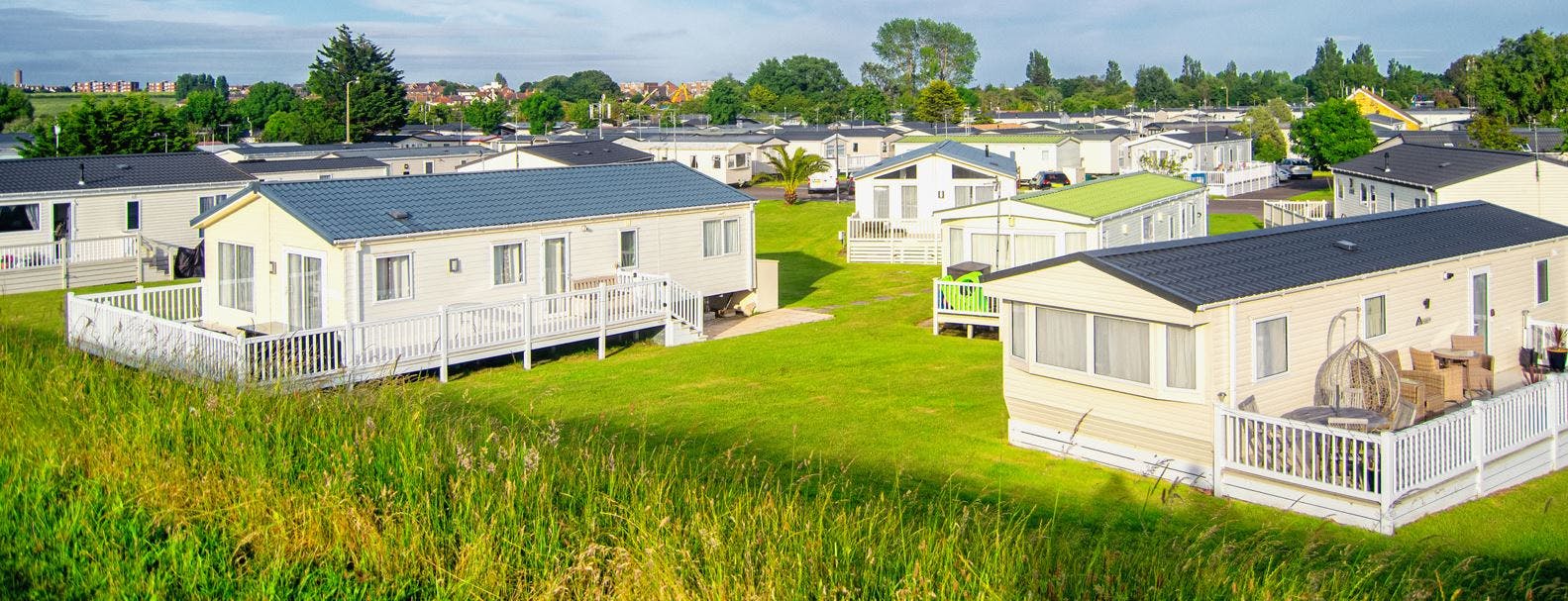

A sale leaseback turns a building that a company owns and occupies into cash, without the company moving out. For net lease investors, it is one of the few ways to buy a property with a long lease and a committed tenant from day one. For brokers and lenders, it is a deal that starts with a conversation, not a listing.
Most guides to sale leasebacks are written for the seller. This one explains how the deal works, compares it with a refinance in actual numbers, and shows how investors, brokers and lenders can find owner-occupied buildings that are likely candidates before anyone else calls.
What is a sale leaseback?
A sale leaseback is a transaction in which the owner of a property sells it to an investor and, at the same closing, signs a long-term lease to remain in the building as the tenant. The seller turns its real estate equity into cash and keeps using the property. The buyer gets an occupied building with a signed lease from the first day of ownership.
The deal is also written as "sale and leaseback" or "sale-leaseback," and the terms mean the same thing. In commercial real estate, the seller is usually a company whose main business is not real estate: a manufacturer that owns its plant, a distributor that owns its warehouse, a restaurant group that owns its sites, or a medical practice that owns its clinic.
How does a sale leaseback work?
A sale leaseback works in two parts that close together. The owner sells the property to an investor at an agreed price, and the owner signs a lease with that investor to keep occupying the building, usually for 10 years or more with fixed annual rent increases. The seller's operations do not pause, and the buyer starts collecting rent immediately.
The owner sets a goal. It decides how much capital it wants to raise and how long it expects to stay in the building.
The owner sets lease terms it can carry. Term, starting rent, annual increases, renewal options and who pays which expenses.
The property goes to market. Net lease investors are approached directly or through a broker or sale-leaseback advisor.
The buyer underwrites the tenant and the real estate. It reviews the company's financial statements, the lease, the building and the location.
The sale and the lease close together. Title transfers, the lease starts, and the seller becomes the tenant the same day.
Sale leaseback vs refinance: a worked example
A regional food distributor has owned its warehouse for 18 years and has paid off the mortgage. The building is worth $14 million. The company needs capital to open a second facility and has two options: sell the building and lease it back, or borrow against it.
| Sale leaseback | Refinance |
Cash raised at closing | $14.0 million | $9.1 million (65% of value) |
Payment in year 1 | $1.0 million rent | About $737,000 in loan payments |
Payment in year 15 | About $1.41 million rent (2.5% annual increases) | About $737,000 (fixed) |
Total paid over 15 years | About $17.9 million | About $11.1 million |
Position after 15 years | Owns nothing; renews, relocates or negotiates a purchase | Still owns the building and owes about $5.4 million |
Future increase in value | Goes to the investor | Stays with the company |
Illustrative figures, not a rate quote. Refinance assumes 65% loan-to-value, a 6.5% fixed rate and 25-year amortization. Both columns exclude transaction costs and taxes. The company pays the building's taxes, insurance and maintenance in both cases.
The sale leaseback raises $4.9 million more up front, and the company pays for it: about $6.8 million more over 15 years, and no building at the end. The trade only makes sense if the extra capital earns more inside the business than it costs, which is why the strongest candidates have a clear use for the money, such as an expansion, an acquisition or paying off more expensive debt.
Why owners choose a sale leaseback
Owners choose a sale leaseback when they want more capital than a loan will provide and they plan to stay in the building. A sale can raise close to the property's full value, while a mortgage lends only a share of it. The cash usually goes into the business: expansion, acquisitions, paying down debt, or funding a recapitalization or buyout.
Activity is rising. U.S. sale-leaseback volume reached about $14.4 billion across 714 transactions in 2025, up 18% by dollar volume from 2024, according to SLB Capital Advisors data reported by IREI, which tied the increase partly to the return of mergers and acquisitions. Balance sheet treatment is a smaller motive than it once was: since the ASC 842 lease accounting standard took effect, most leases longer than 12 months appear on the tenant's balance sheet.
What buyers underwrite in a sale leaseback
Buyers underwrite four things: whether the tenant can pay rent for the full term, the length and structure of the lease, whether the rent is close to market, and how easy the building would be to lease again if the tenant left. A financially strong company in a well-located building with a long triple net lease is the profile most buyers compete for.
Tenant credit. Revenue, profit, debt and years in business. Larger and investment-grade companies attract more bidders.
Rent compared with market. A seller can push the price up by agreeing to above-market rent. Buyers check whether that rent would hold with a new tenant.
How important the site is to the tenant. A plant or distribution hub the business depends on is less likely to be vacated than a secondary location.
The real estate itself. Location, building age, clear height for industrial, parking and zoning all matter if the property ever needs a new tenant.
Lease terms that decide a sale leaseback
The lease is the asset the buyer is really paying for, so its terms decide the price and the risk on both sides. The terms that matter most are the length of the lease, the rent increases, who pays expenses, any parent company guarantee, renewal and repurchase rights, and the documents that protect the lease if the building is financed or sold.
Initial term. Commonly 10 to 20 years or longer. Longer terms usually support a higher price.
Rent increases. Fixed annual percentage increases or periodic steps, set in the lease rather than negotiated later.
Triple net (NNN) structure. The tenant pays property taxes, insurance and maintenance on top of rent, as it did when it owned the building.
Guaranty. If the tenant is a subsidiary, buyers often ask the parent company to guarantee the lease.
Renewal and repurchase rights. Renewal options let the tenant extend at a fixed or market rent. Repurchase options and rights of first refusal let the seller buy the building back or match an offer, and they affect the accounting treatment covered under risks below.
Master lease. In a portfolio deal, several properties sit under one lease, so the tenant cannot give up the weakest site and keep the rest.
Memorandum of lease, SNDA and estoppel certificate. The memorandum records the tenant's rights in the public record, the subordination, non-disturbance and attornment agreement (SNDA) protects the tenant if the buyer's lender forecloses, and the estoppel certificate is the tenant's signed confirmation of the lease terms.
How to find sale leaseback candidates with property data
Sale leaseback candidates are commercial buildings owned by the business that occupies them, held for many years, carrying little or no recorded debt, and in property types net lease buyers want. You can build that list from property records by matching each building's owner to its occupant, then filtering by hold period, mortgage history, asset type and the size of the occupying business.
The owner rarely holds the building in the operating company's name. A manufacturer called Acme Tools might own its plant through "1200 Industrial Way LLC." Matching the two takes a related name, a shared mailing address or the same people behind both entities, which is the core of finding true commercial property owners. Once the owner and occupant are matched, these signals rank the list:
Signal | Why it matters | Where it comes from |
Owner and occupant are related | Only an owner-occupier can do a sale leaseback | Owner of record, occupant business records, entity filings |
Held 10 years or more | More equity built up and a business settled in the site | Last recorded sale date |
No recorded mortgage, or a loan maturing soon | A sale can replace a refinance the owner already needs | Recorded mortgages: lender, amount, maturity date |
Property type net lease buyers want | Industrial, flex, freestanding retail, restaurant, auto service and medical office trade most easily | Assessor land use and building data |
Established occupying business | A first read on tenant strength before financials | Occupant employee count, sales volume, year founded |
Several owner-occupied sites | A possible portfolio deal under a master lease | All properties tied to the same owner |
[Reonomy data point to add before publishing: count of owner-occupied industrial (or all commercial) buildings held 10+ years with no recorded mortgage, nationally or for the top 10 metros. To be pulled by the Reonomy team. One sentence here and one in the intro.]
Reonomy links these records on every parcel, across more than 54 million U.S. commercial properties, 68 million transactions and 30 million owner and contact records, with occupant data and direct connections to all 3,100 county assessors. That turns the table above into a saved search instead of a records project.
How investors, brokers and lenders use sale leaseback data
Investors, brokers and lenders work from the same list of owner-occupied buildings but use it for different jobs. Investors use it to find deals before an advisor runs a competitive process. Brokers use it to win sale-leaseback assignments. Lenders use it to spot borrowers whose refinance could turn into a sale, and to finance the buyers.
For net lease investors
Most marketed sale leasebacks are run as competitive sales by an advisor, which pushes prices up. An investor that reaches an owner-occupier first can discuss a sale leaseback before that process starts. Start with your buy box (property type, size, market and minimum tenant size), filter for long holds and low recorded debt, then check the owner's entire property portfolio to see whether a single-asset deal could become a portfolio.
For brokers
For a broker, a sale leaseback is a listing that does not exist until someone suggests it. Long-held owner-occupiers with a loan coming due are the strongest pitch, because the owner already has to decide how to fund that maturity. The right contact is the owner, CEO or CFO of the operating company, not the facilities manager. Brokers already work owners this way for other off-market commercial properties.
For lenders
Lenders see sale leasebacks from two sides. An owner-occupied borrower with a maturing loan may sell and lease back instead of refinancing, so those maturity dates are worth watching. And the buyer of a sale leaseback usually finances the purchase, with a long lease to a strong tenant behind the loan. Recorded commercial mortgage data shows the lender, loan amount and maturity date where they are recorded.

Get started with Reonomy
Our Reonomy web app is powered by AI technology to help you access property owner information, property records, company data, and successfully close on commercial real estate deals.
What are the risks of a sale leaseback?
For the seller, the main risks are losing future appreciation, committing to years of rising rent and giving up control over changes to the building. For the buyer, the main risks are a tenant that weakens or leaves, rent set above what the market would pay, and a building that is hard to lease again. Both sides also need the deal to count as a true sale.
Seller: lost appreciation and a long obligation. If the property's value rises, the gain belongs to the investor, and rent rises every year whether or not the business still needs the space.
Seller: less flexibility. Expansions, major alterations or a sublease usually need the landlord's consent.
Buyer: single-tenant exposure. If the tenant defaults or leaves, income drops to zero until the space is leased again.
Buyer: above-market rent and specialized buildings. A high rent supports a high price at closing but may not be repeatable, and a plant fitted for one company can be expensive to adapt.
Both: a failed sale. Under ASC 842, if the seller holds an option to buy the property back, or the leaseback is classified as a finance lease, the transaction generally does not count as a sale. The seller keeps the building on its books and records the proceeds as a financing liability. Both sides should confirm the accounting with their advisors before agreeing to terms.
What happens when a sale leaseback lease ends?
When the initial term ends, the tenant usually has three paths: exercise a renewal option, negotiate a new lease, or move out. If the lease includes a purchase option or right of first refusal, the tenant may also buy the building back. For the investor, this is where re-leasing risk becomes real, which is why a building with three years left on its lease is a very different investment from one with fifteen.
Frequently asked questions about sale leasebacks
How does a sale-leaseback work?
Is a sale/leaseback a good idea?
What are the disadvantages of a sale and leaseback agreement?
How does a sale-leaseback process work?
Who buys sale leaseback properties?
Find owner-occupied buildings before they hit the market
The best sale-leaseback opportunities rarely appear as listings, because the owner has to be convinced before the property is ever marketed. A list of long-held, owner-occupied buildings with little debt, matched to the people who actually make the decision, gives you the reason to make the first call.
Start a free trial of Reonomy to find owner-occupied buildings in your market, see the decision makers behind the LLCs that own them and reach them directly. Start your free trial.
Resources