How to sell commercial real estate: a step-by-step guide for owners and brokers
Whether you're an owner or broker, selling commercial real estate isn't what it used to be, and that's a good thing.

Content updated on Aug 10, 2026
Selling commercial properties takes finesse. Whether you’re an owner wanting to sell your property by yourself or an agent looking to find investors on behalf of a client, there are a few strategies you can employ to find qualified buyers for commercial assets. In order to find the best deal and close as fast as possible, you need to:
Be a really effective marketer and/or
Have a direct, reliable pathway to identifying potential buyers.
In this article, we’ll show you how to easily accomplish both of these tasks.
This guide walks the sale through in order, from preparing the property and setting a price to choosing a sales route, finding buyers, negotiating, and closing.
How to sell commercial real estate in six steps
Selling commercial real estate follows six steps: prepare the property and assemble documentation, establish a defensible price, choose a sales route, market the property to qualified buyers, negotiate terms, and complete due diligence and closing. Most commercial sales take three to nine months from listing to close. Owners and brokers follow the same sequence, though brokers usually compress the marketing and buyer identification stages.
Prepare the property and gather your documents.
Set a price the market will support.
Choose how you will sell: broker, listing platform, or direct off-market outreach.
Market the property and reach qualified buyers.
Negotiate terms and sign a purchase agreement.
Complete due diligence and close.
Prepare the property and gather your documents
Preparation determines how quickly a commercial property sells. Buyers and their lenders request financial and legal documentation early, and gaps in that paperwork are a common cause of delayed or collapsed closings. Assemble the deed, title report, rent roll, operating expense records, tax statements, zoning documentation, and any environmental reports before the property goes to market.
What documents do you need to sell a commercial property?
Buyers evaluate a commercial property on its income and its risk, so the document package has to answer both. The list below covers what most buyers, lenders, and attorneys ask for during a commercial sale.
Deed and current title report, confirming clear ownership and disclosing any liens or encumbrances.
Rent roll listing every tenant, lease term, rent amount, and outstanding arrears.
Executed lease agreements, including amendments, renewal options, and tenant improvement obligations.
Operating expense records covering utilities, maintenance, insurance, and management fees.
Property tax statements for the past three years.
Income statements and profit and loss statements, presented monthly and annually for at least three years.
Capital expenditure history, such as roof replacements, HVAC upgrades, and structural work.
Zoning classification, certificate of occupancy, and any municipal approvals or variances.
Survey, floor plans, and site plans.
Environmental reports, including any Phase I assessment already on file.
Transferable warranties for roofing, mechanical systems, and building improvements.
Physical condition and compliance
Condition affects both price and speed. Buyers form a view of a property during the first walkthrough, and visible deferred maintenance invites price reductions later in negotiation. Handle parking lot repairs, exterior lighting, signage, and landscaping, and resolve any building code, zoning, or accessibility issues before listing. Avoid over-improving. Cosmetic upgrades that do not raise net operating income rarely return their cost in a commercial sale.
Set a price the market will support
Commercial property is priced primarily on income rather than on comparable sales. The income capitalization approach divides net operating income by the prevailing capitalization rate for the property type and submarket. Sales comparison supports that figure, and becomes the primary method for owner-occupied buildings without meaningful rental income. Pricing above what the income supports extends time on market and invites reduced offers.
Both approaches depend on accurate inputs. Verified net operating income comes out of the financial records assembled in the previous step, while capitalization rates and recent sale prices come from transaction data. A full walkthrough of the income, sales comparison, and cost approaches sits in our guide to commercial real estate valuation, and commercial sales comps supply the recent transaction evidence that backs the number up.
Choose how you will sell
There are three routes to a commercial sale, and they are not mutually exclusive. A broker brings transaction expertise and an existing buyer network. Listing platforms bring reach. Direct off-market outreach, built on ownership and transaction records, lets you approach likely buyers before the property is publicly marketed. Most sellers combine at least two of the three.A commercial real estate broker handles pricing, marketing, buyer communication, and negotiation in exchange for a commission, typically around 6% of the final sale price and split with the buyer’s broker when one is involved. Brokers earn their fee most clearly on complex transactions and on properties where an established buyer network shortens the marketing period.
There are three main strategies for selling a commercial property of any kind:
Work with a commercial real estate broker.
Market your property on commercial or FSBO listings websites.
Analyze off-market data to identify likely buyers and connect with them directly.
While the idea of off-market transactions is nothing new, access to off-market data has evolved in recent years. Now, off-market data goes far beyond public records. This data has become a valuable resource for those looking to sell commercial real estate. However, longer-standing, more traditional options such as working with a commercial agent or advertising your property on a listings website are still effective sales strategies. As a matter of fact, you can combine these three different methods to ensure that you can find fitting buyers time and again.
Work with a commercial real estate broker
A commercial real estate broker handles pricing, marketing, buyer communication, and negotiation in exchange for a commission, typically around 6% of the final sale price and split with the buyer’s broker when one is involved. Brokers earn their fee most clearly on complex transactions and on properties where an established buyer network shortens the marketing period.
Most commercial property owners choose to work with a broker due to the complexity of commercial real estate transactions. The paperwork, intricacies, and time needed to close a deal often require an experienced broker’s assistance. Working with a commercial real estate broker has many advantages, beyond just closing the deal and completing paperwork. These multiple, invaluable services make a broker’s commission well worth the cost.
Ensuring a favorable return on your property
An experienced broker will help you price your property right for the current market conditions, saving you hours of research time. Brokerage firms keep up with the current industry and economic trends, as well as any significant recent sales in their area of operation. They will use sales comps analysis to determine a fair but realistic listing price for your building but will allow room for negotiations with potential buyers.
Brokers have an extensive network of contacts
Seasoned commercial real estate brokers have a well established professional network of other brokers, investors, and additional third parties that may be interested in purchasing your commercial real estate right away. Rather than relying only on traditional marketing strategies, your broker can present your property directly to these individuals, thus significantly increasing your chances of finding a qualified buyer quickly. This network is built over time. Brokers have created connections over years – or even decades – in the business. Their connections alone make hiring an experienced broker worth the cost.
Communicating with potential buyers
Your listing broker will also save you a great deal of time and effort by becoming the main point of contact for any inquiries, tour requests, and potential offers from interested parties. Brokers also coordinate and host all property tours and “open house” events. Your agent can even suggest what renovations and staging changes you should consider to make your property more attractive to investors.
Negotiating with potential buyers
Last but not least, your broker will lead the eventual negotiation back-and-forth, as well as the actual closing. This negotiation process can be lengthy, but an expert broker will ensure you get the best possible price for your real estate property. The broker you hire gets paid in the form of a commission after the sale of the property is complete. Therefore, it’s in the broker’s best interest to get the absolute best price for your commercial real estate property.
Typically, the commission is a percentage of the final sale price, usually around 6%. If the buyer also has an agent in the transaction, the commission is split between the two participating brokers according to a separate agreement.
Before hiring a commercial real estate broker to sell your property, conduct due diligence, and ensure you hire the right person. Just like with any other professional, you should check their references, speak with some past clients, and ensure they are dedicated to helping you get the best deal for your property. Hiring the right broker can make all the difference between a quick, profitable sale and months on the market without a buyer.
List your property for sale
Listing platforms put a commercial property in front of the brokers, investors, and corporate real estate teams who search them daily. Basic listings are usually free, with paid tiers for placement and advertising features. Listing on more than one platform matters, because most professionals search only one or two of them regularly.
Hiring a broker and using a listing service to advertise your commercial real estate for sale are not mutually exclusive options. As a matter of fact, unless a broker has an immense network of connections, they’ll typically list your property on several listing platforms as a part of their marketing efforts. The number of listing services for both commercial and residential real estate has increased dramatically since the early days of the Internet.
Some of the more prominent platforms in today’s marketplace include LoopNet, Showcase, Ten-X Commercial, CREXi, and Commercial Exchange. Additionally, there are many niche sites that focus on specific markets or types of commercial property such as gas stations, self-storage units, or vacant land.
Featuring your commercial asset on these platforms can dramatically increase your chances of finding a qualified buyer. These online listing services have become the best way for investors, tenant rep brokers, and even corporate real estate professionals to find commercial real estate. LoopNet alone generates 39 million total monthly searches by users from the U.S. and around the world.
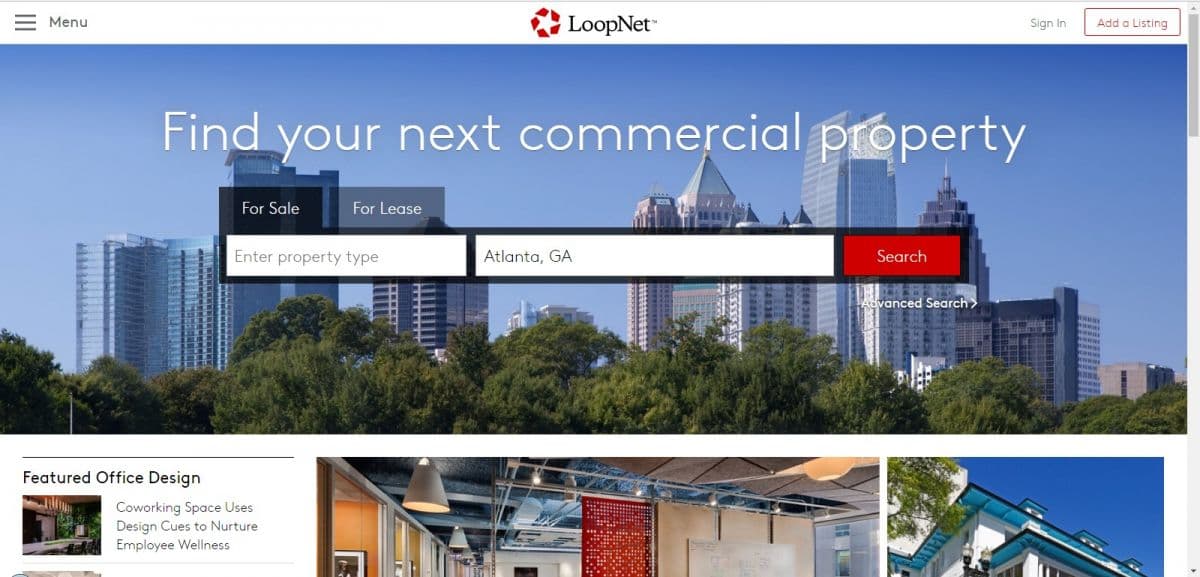
Most of the notable platforms we mentioned above allow you to create a basic listing for your commercial property free of charge. These listings platforms include advanced listing features or advertising opportunities to highlight your property. However, these options typically require a paid membership or other fees.
It’s also best to list your commercial real estate property for sale on multiple platforms. While experienced real estate professionals are familiar with most of these listing services, they typically favor and frequent only a couple for their everyday property searches.
For sale by owner platforms
While definitely a less common practice in the commercial real estate industry, selling by owner is also an option. Some owners have ample experience with commercial property sales and feel confident completing the transaction without an agent. Others simply want to maximize their proceeds by avoiding the broker commission.
First, it is worth noting that owners can add their commercial properties to most CRE listings platforms without a broker’s help. These platforms do not limit their listings to those represented by brokers. Even if you have to purchase a subscription or pay a fee, the global exposure of your listing to potential investors and brokers will be well worth the cost.
However, there are several websites dedicated solely to FSBO listings. Notable platforms include FSBO.com and For Sale By Owner. You can also advertise your commercial real estate on sites like Craigslist and Facebook, and even the digital classifieds of your local newspaper.
Craigslist, for example, has a special category for real estate sales and has sub-sites for virtually every major city in the United States. Believe it or not, though not widely popular, you can even list your commercial property for sale on eBay.
Selling commercial property without a realtor works best when you already know the likely buyer pool or have closed commercial transactions before. The trade-off is that pricing, marketing, buyer qualification, and negotiation all fall to you, and mispricing without a broker’s read on the market is the most expensive mistake available to a seller.

Get started with Reonomy
Our Reonomy web app is powered by AI technology to help you access property owner information, property records, company data, and successfully close on commercial real estate deals.
Find buyers off market
Off-market buyer research identifies likely purchasers before a property is publicly listed. Rather than waiting on inbound interest, you search commercial property records for investors who already own comparable assets, or who recently sold and hold capital to redeploy. Reonomy covers more than 54 million U.S. properties and resolves LLC ownership to named contacts.
Both brokers and owners also consider other approaches to selling real estate. Identifying prospective buyers through off-market research can be a proactive way to identify potential investors. Many professionals take advantage of local public property records to conduct off-market research. However, public records research is usually reactive research, meaning you have a potential buyer in mind, then turn to public ownership data to analyze their portfolio on a deeper level.
Instead, the Reonomy web app gives you access to nationwide off-market data, allowing you to conduct proactive research. This process allows you to discover new contacts likely to buy your commercial property. There are a couple of ways to approach off-market searches for potential buyers.
Review real estate comps
Reonomy has a database of more than 20 million sales transactions nationwide, helping both owners and brokers to generate commercial comps for any property. Accessing them is pretty simple.
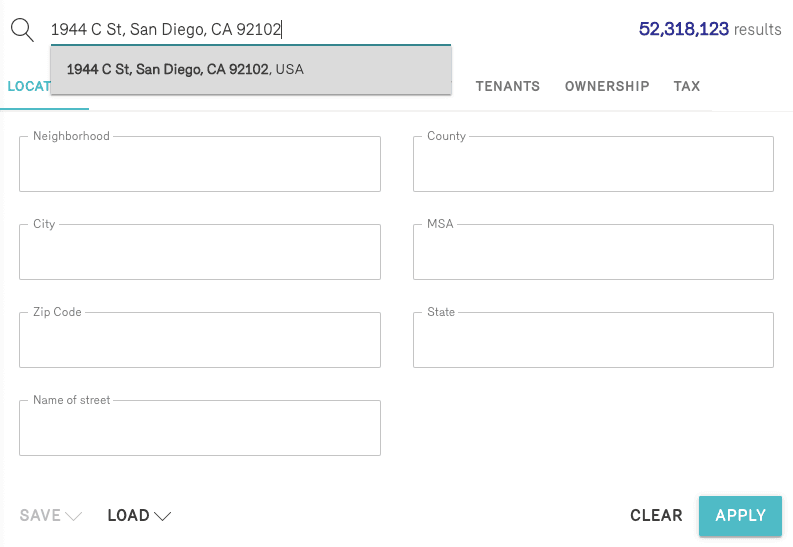
Say you’re a broker looking to find a buyer for 1944 C St, San Diego, CA 92102.
The property is a 6-unit multi family building in Central San Diego with a lot area of 5,000 square feet, and a building size of roughly 2,700 square feet. To find similar properties, start by entering the address in the search bar. Click on the property once it appears in the dropdown:
This takes you to a profile page for that individual property. Then, click on the “View Comparables” icon to access a list of similar assets.
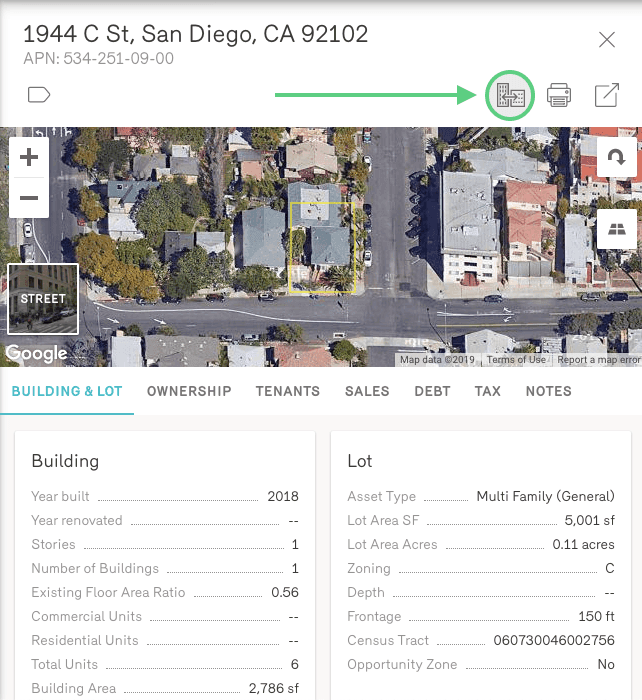
In this case, there are nearly 300 commercial comps. Each is curated based on several filters automatically added by Reonomy.
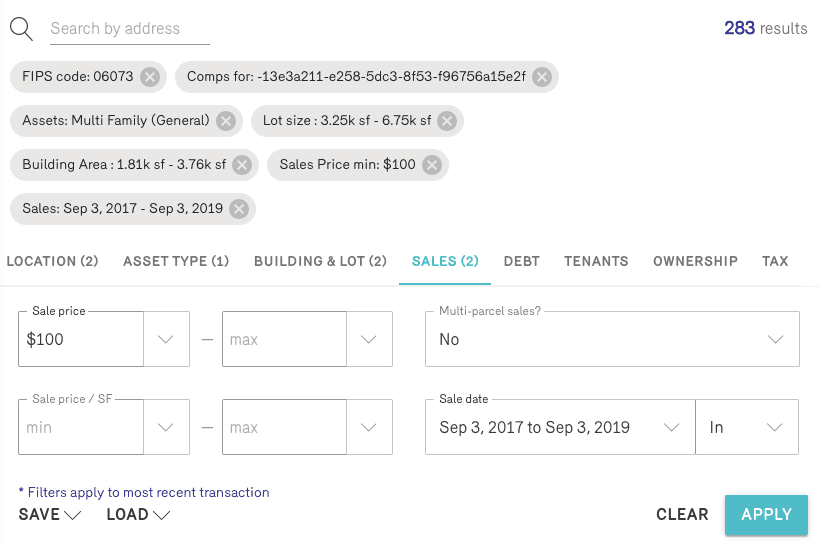
That’s almost 300 property owners that may be interested in buying another property similar to one they already own. You can continue reviewing these properties individually to better understand the owners and their portfolios, determine if they have cash on hand, and so on.
Find recent buyers and sellers
Speaking of cash on hand, another way to sell commercial real estate off-market is to find recent buyers and sellers of similar assets. You can start a property search using location, asset type, and building and lot filters, or simply run a comps search using your subject property (as demonstrated above). Then, filter the results by “most recent sale date” in order to only see properties recently sold.
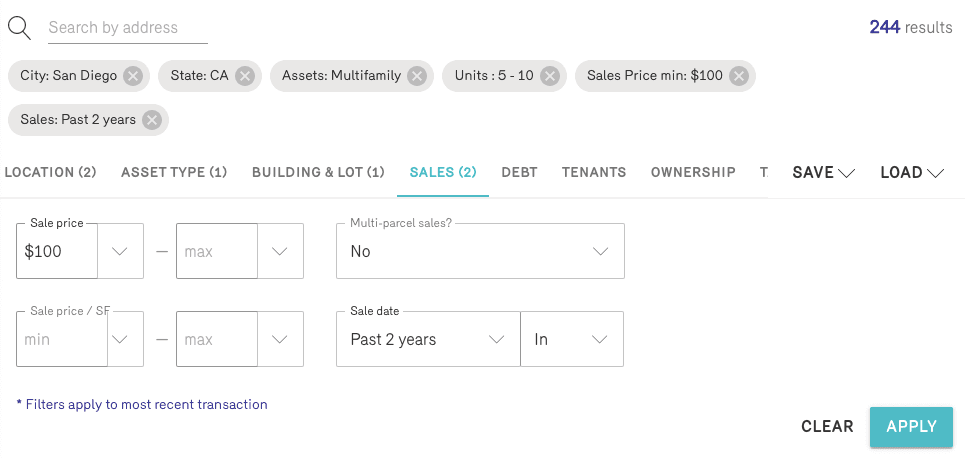
From here, you can review the ownership details of any individual property, including the names and contact information of LLC owners.
Recent buyers may still be actively looking to expand their portfolios with similar properties. Recent sellers may have cash on hand from their recent sale, and therefore may be looking to reinvest that capital in a new property.
Learn a bit more about what you can find off-market in this video:
Once you have identified these property owners, or identify those who have recently sold commercial properties, you can contact the owners directly and start a conversation. Using the knowledge you’ve gained from researching their portfolios, you can better prepare a pitch and strike a deal. Do you want more information about researching off-market properties? We would be happy to help. Contact us for more information about off-market research and commercial real estate sales.
Negotiate the deal and get to closing
Once an offer is accepted, a commercial sale moves through a letter of intent, a signed purchase and sale agreement, a due diligence period, and closing. Due diligence commonly runs 30 to 60 days and covers title search, appraisal, environmental assessment, lease and estoppel review, and financing approval. Most deals that fall apart do so inside this window rather than at the negotiating table.
What happens during due diligence?
The buyer verifies everything the marketing materials claimed. A title company runs a title search to confirm clear ownership and surface liens. An appraiser values the property for the buyer’s lender. A Phase I environmental site assessment checks contamination risk and is a standard requirement on most commercial loans. The buyer reviews leases and typically requests estoppel certificates from tenants confirming the terms in writing. Deposits usually go non-refundable at defined milestones, and unmet contingencies such as failed financing or an adverse environmental finding let the buyer walk.
How long does it take to sell a commercial property?
Plan for three to nine months from listing to close. Preparation and pricing take two to six weeks. Marketing through to an accepted offer commonly runs one to four months, depending on asset type and market conditions. Escrow and due diligence add another 30 to 60 days, and longer when the buyer needs new financing. Off-market sales to an already identified buyer close faster because the marketing period is compressed or skipped entirely.
Tax implications of selling commercial property
A commercial sale triggers federal capital gains tax on appreciation plus depreciation recapture on depreciation previously claimed, currently taxed at up to 25%. State and local taxes may also apply. A 1031 exchange can defer both by reinvesting proceeds into like-kind property within statutory deadlines. Treatment depends on ownership structure and holding period, so confirm your position with a tax advisor before signing anything.
The two deadlines in a 1031 exchange are firm: 45 days from closing to identify replacement property in writing, and 180 days to complete the purchase. Proceeds must be held by a qualified intermediary rather than received directly, or the exchange fails. Sellers planning an exchange generally start building a replacement shortlist before the sale closes, which is one more argument for identifying target properties and owners early rather than late.
Frequently asked questions
Who pays closing costs when selling commercial property?
Closing costs on a commercial sale are negotiable and usually split, though local custom drives most of it. Sellers typically carry the brokerage commission, transfer and documentary taxes, the owner’s title policy in many states, and prorated property taxes up to the closing date. Buyers typically carry lender fees, the appraisal, the environmental assessment, survey costs, and their own title endorsements. Escrow and recording fees are commonly shared. Expect total closing costs to run between 1% and 3% of the sale price for the seller, before commission.
How hard is it to sell commercial real estate?
Harder than residential, mainly because the buyer pool is far smaller and most purchases depend on financing that the buyer has to secure during escrow. Difficulty rises with price, specialised build-out, deferred maintenance, and short remaining lease terms, and falls with stabilised income, credit tenants, and accurate pricing. The two variables a seller controls most directly are pricing the asset to what its income supports and identifying likely buyers early rather than waiting for inbound interest.
Can you sell a commercial property without a broker?
Yes. Owners can list on most commercial platforms directly and can approach buyers themselves. Selling without a broker saves the commission, typically around 6% of the sale price, but pricing, marketing, buyer qualification, and negotiation all become your responsibility. It works best for owners who have closed commercial transactions before or who already know the likely buyer.
How do you find buyers for a commercial property?
Three methods are common: a broker’s existing network, public listing platforms, and direct outreach based on ownership data. Direct outreach identifies owners of comparable properties in the same market, investors who recently sold and hold capital to redeploy, and entities whose portfolio pattern matches your asset. Ownership records resolve LLCs to named contacts so you can reach the decision maker rather than a registered agent.
How is a commercial property valued before a sale?
Income-producing commercial property is valued primarily on the income capitalization approach, which divides net operating income by the prevailing cap rate for the property type and submarket. The sales comparison approach supports that figure using recent transactions of similar assets, and becomes the primary method for owner-occupied buildings without significant rental income.
What taxes do you pay when you sell commercial property?
Sellers generally owe federal capital gains tax on appreciation plus depreciation recapture on depreciation previously claimed, taxed at up to 25%. State and local taxes may also apply. A 1031 exchange can defer both if proceeds are reinvested into like-kind property, with 45 days to identify the replacement and 180 days to close. Confirm your specific position with a tax advisor.
The sellers who close fastest are the ones who did the work before the listing went live: clean documentation, a price the income actually supports, and a shortlist of buyers who already own something comparable. That last piece is the one most sellers skip, and it is the difference between a long marketing period and a short one.
Search 53 million U.S. commercial properties, see who owns them, and reach the decision maker directly. Request a free trial.
Author

Reonomy
Resources team
Author
Reonomy
Resources team